Game Development Cost depends on the type of game, platform, features, art style, team, and time needed to complete the project.
- 2D and 3D games require different levels of art, animation, programming, and optimization.
- A mobile game may need very different resources compared with an RPG, PC game, console title, or multiplayer project.
- Planning the scope early makes it easier to understand where the development budget will be used.
- This guide covers game types, mobile development, game art, multiplayer features, team requirements, hidden expenses, timelines, and budgeting.
- Whether you are an indie developer, startup, or looking for a Game Development Company, understanding these factors can help you plan the project more clearly.
How Much Does It Cost to Develop a Game in 2026?
Game Development Cost depends on the game type, team, features, platform, and production goals. A common question is how much does it cost to make a game, but there is no single answer that fits every project.
What Drives the Budget
Video game development cost is connected to the amount of work needed to plan, create, test, launch, and maintain the game.
Design and Planning
- Game genre and complexity
- Target platform
- Art style and visual detail
- Story length and gameplay depth
Team and Technology
- Team size and experience
- Game engine, tools, and software
- In-house team or outsourced studio
- Multiplayer and server requirements
Launch and Support
- Quality testing and bug fixing
- Marketing and app store preparation
- Updates after release
- Player support and live events
A clear plan at the beginning makes it easier to control changes later in development.
Budget Focus by Game Type
| Game Type | Biggest Spending Area | Ongoing Expense |
| Hyper-casual | Prototyping and ad setup | Ad network upkeep |
| Mobile casual | Art, sound, and monetization | Content updates |
| Indie PC or console | Design and testing | Patches and platform fees |
| Online multiplayer | Networking and backend | Hosting and moderation |
| AAA title | Large team and content | Live service and support |
A well-defined scope gives the team a clearer path from concept to launch. Define the core features, choose the right team, and test important systems early.
What Factors Affect Game Development Cost?
Game Development Cost is shaped by many decisions made before production starts. Understanding these factors helps studios and developers build a practical game development budget.
Key Cost Drivers
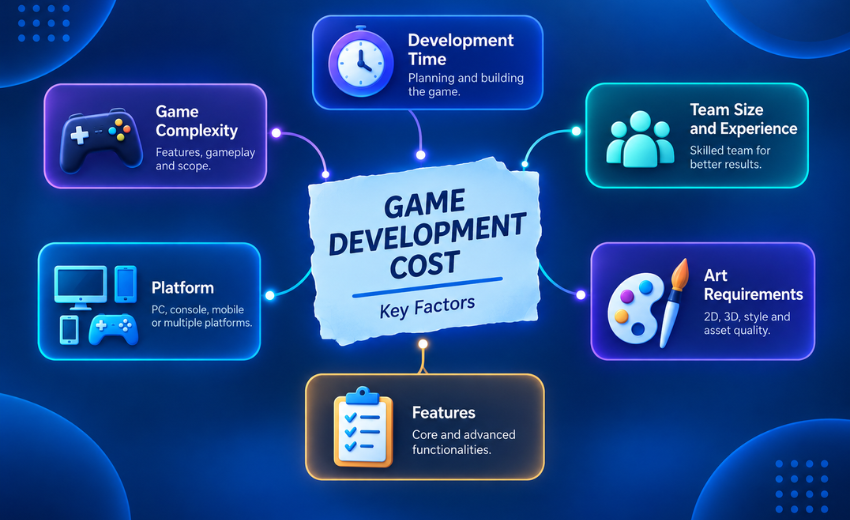
Video game cost by genre can change because of complexity, development time, platform, features, art requirements, and team structure.
Game Complexity
A simple puzzle game and a large open-world title can require very different levels of development work.
- Number of levels or maps
- Gameplay mechanics
- Enemy and character behavior
- Physics and world systems
Every additional system needs design, development, testing, and maintenance.
Development Time
A longer production cycle generally means more working hours and more opportunities for changes during development.
- Planning and prototype stage
- Production and content creation
- Bug fixing and polish
- Delays caused by scope changes
Clear milestones help the team track progress and protect the Game Development Timeline.
Platform
The target platform affects development tools, testing requirements, optimization, and publishing.
- Mobile, PC, or console
- Cross-platform support
- Device and screen testing
- Store rules and approvals
Supporting multiple platforms can increase technical work because each platform may require separate testing and adjustments.
Features
Each feature adds its own design, programming, testing, and support requirements.
- Multiplayer and online modes
- In-app purchases and ads
- Player accounts and save systems
- Leaderboards and chat
A better approach is to prioritize features that directly support the main gameplay instead of trying to build everything at once.
Art Requirements
Game Art affects production time because every asset needs to be planned, created, reviewed, and integrated into the game.
- 2D or 3D visuals
- Character and environment design
- Animation and visual effects
- User interface and icons
The number of unique assets and the level of visual detail can have a major effect on production work.
Team Size and Experience
The Game Development Team affects how work is divided and how quickly problems can be solved.
- Programmers, artists, and designers
- Producers and testers
- Skill and experience level
- In-house or outsourced team
The right mix of specialists can reduce rework and keep different parts of the project moving together.
How Much Does It Cost to Develop Different Types of Games?
Game Development Cost changes from one project to another. Genre, art style, features, platform, and team size all influence the amount of work involved.
What Affects the Price of a Game?
Two games in the same genre can still require very different development efforts.
- Game design and story depth
- Graphics and animation quality
- Android, iOS, PC, or console platforms
- Backend, servers, and security
- Testing and post-launch updates
When planning the cost to develop a mobile game, start by defining the platform, target audience, core gameplay, and required features.
2D Games
2D games can have a simpler production workflow, but their actual requirements depend on the number of assets, animation style, and gameplay systems.
- Sprite and character artwork
- Level design and animation
- Sound effects and music
- Engine and tool requirements
2D Game Development becomes easier to manage when the asset list and animation requirements are clearly defined before production.
3D Games
3D games usually involve more production steps because characters, environments, objects, and effects need to work together in a three-dimensional space.
- 3D modeling and texturing
- Rigging and motion capture
- Lighting and physics
- Performance optimization
3D Game Development can become more demanding as visual detail, world size, and interactive systems increase.
RPGs
RPGs are often content-heavy because they combine characters, stories, quests, progression, environments, and game systems.
- Story and quest design
- Character stats and inventory
- Large maps and environments
- Save systems and balancing
The amount of content is one of the biggest factors behind a longer Game Development Timeline.
Casual Games
Casual games often focus on simple controls, short sessions, and easy-to-understand gameplay.
- Clean interface and visuals
- Simple gameplay mechanics
- Ads and in-app purchases
- Regular content updates
A smaller gameplay scope can simplify production, but retention, monetization, and ongoing content still need careful planning.
Casino Games
Casino games require particular attention to game logic, security, payments, and compliance requirements.
- Random number generator setup
- Secure payment systems
- Licensing and compliance
- Player account protection
The technical and regulatory requirements can add additional development work beyond the basic gameplay.
Multiplayer Games
Multiplayer games allow players to interact through networking and backend systems.
- Server hosting and scaling
- Matchmaking and lobbies
- Anti-cheat protection
- Chat and friend features
Multiplayer Game Development also requires planning for server performance, security, monitoring, and ongoing maintenance.
| Game Type | Main Cost Drivers | Development Complexity |
| 2D | Art, animation, levels | Low–Medium |
| 3D | Models, animation, lighting | Medium–High |
| RPG | Content, systems, worlds | High |
| Casual | Gameplay, monetization, content | Low–Medium |
| Casino | Backend, security, compliance | High |
| Multiplayer | Networking, servers, backend | High |
The important point is that genre alone does not determine Game Development Cost. The scope and systems inside the game matter just as much.
How Much Does Mobile Game Development Cost?
Every mobile project has different requirements. Mobile Game Development Cost depends on the game type, features, art, platform, team, and development timeline.
What Affects the Budget?
The cost to develop a mobile game is shaped by several connected decisions:
- Game genre and gameplay complexity
- 2D or 3D graphics and animation
- Backend, server, and multiplayer features
- Third-party tools, ads, and payment systems
- Testing, launch, and future updates
A detailed feature list gives the development team a clearer understanding of the work involved.
Android
Android games can reach a wide range of devices, but that variety also creates additional testing requirements.
- Different screen sizes and chipsets
- Google Play publishing and policy checks
- Hardware performance testing
- Android version compatibility
More device combinations can mean more testing to maintain a consistent player experience.
iOS
iOS has fewer device variations, which can make device testing more focused.
- Fewer devices and screen sizes
- Apple Developer account and App Store review
- Design and performance guidelines
- Swift or Unity-based development
- Test Flight beta testing
The App Store review process still requires the final build and store information to be prepared carefully.
Cross-Platform
A shared codebase can reduce duplicated development work, but both platforms still need proper testing.
- One codebase using Unity or Unreal
- Shared art, logic, and features
- Platform-specific fixes
- Separate Android and iOS testing
- Performance tuning
Cross-platform development can be useful when a project needs to reach multiple platforms while keeping much of the core development shared.
How Much Do Game Art and Multiplayer Features Cost?
Game Development Cost can increase when a project requires detailed Game Art or online features because both areas involve specialized skills and ongoing testing.
2D Game Art
2D Game Art can have a straightforward workflow, especially when the visual style is clearly defined.
- Sprites and character sheets
- Backgrounds and parallax layers
- Frame-by-frame animation
- UI buttons, icons, and menus
Even a 2D game can require significant production time when it includes many unique animations and assets.
3D Game Art
3D Game Art involves several connected production stages.
- Modeling and UV mapping
- Textures and materials
- Rigging and animation
- Lighting and optimization
The level of detail required for characters and environments can have a direct effect on the amount of art production involved.
Character & Environment Art
Characters and environments help establish the visual identity of a game.
- Character concepts and outfits
- Props, buildings, and landscapes
- Number of levels or maps
- Reusable versus custom assets
Planning reusable assets where appropriate can help maintain visual consistency while reducing unnecessary repeated work.
Multiplayer & Backend
Online games need reliable backend systems and regular testing to support player interactions.
- Server setup and hosting
- Matchmaking and player accounts
- Chat, leaderboards, and friend lists
- Anti-cheat and security
- Monitoring and updates
Multiplayer game development cost also depends on expected player activity, server requirements, and how much support the game needs after launch.
Quick Comparison of Key Factors
| Feature | Main Driver | Team Needed | Time Impact |
| 2D Art | Animation frames | Illustrator, animator | Low to medium |
| 3D Art | Model detail, rigging | 3D artist, rigger | Medium to high |
| Characters & Worlds | Unique assets | Concept and environment artists | Medium to high |
| Multiplayer Backend | Player count, server load | Backend engineer, QA tester | High and ongoing |
Understanding these requirements early makes it easier to plan the Game Development Cost with the right Game Development Company for your project needs.
What Can a Game Development Team Cost Overall?
Game Development Cost depends on the people involved, their responsibilities, and the number of hours needed for the project. A simple mobile game may need a smaller team, while a larger title may require several specialists.
What Affects Team Budget
The game developer hourly rate, project scope, location, experience, and timeline can all influence the overall budget.
- Project size and features
- Team experience
- Hiring location
- Development timeline
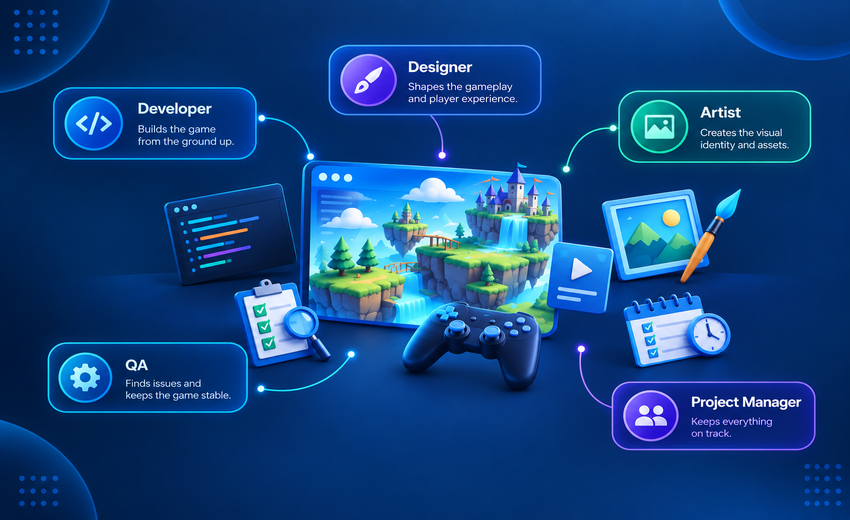
Developer
Developers bring the game design to life by building the systems and gameplay players interact with.
- Gameplay and mechanics
- Unity or Unreal Engine work
- Bug fixing and optimization
- Server and multiplayer setup
Experience with the selected engine and platform can help avoid common technical problems and reduce rework.
Designer
Designers shape how the game works and how players move through it.
- Level and gameplay design
- Game rules and balance
- Menus and player flow
- Player feedback and testing
UI/UX Artist support can be useful when the game needs polished menus, screens, icons, and player interactions.
Artist
Artists create the visual identity and assets used throughout the game.
- 2D and 3D character models
- Environment and background art
- Animation and visual effects
- Concept art and style guides
A Game Artist should understand the visual style, technical requirements, and target platform of the project.
QA
QA testers check whether the game works correctly across different situations and devices.
- Manual gameplay testing
- Device and platform checks
- Bug reports
- Performance and crash testing
Testing throughout production can catch problems while they are still easier to fix.
Project Manager
Project managers coordinate tasks, timelines, communication, and project risks.
- Sprint and task planning
- Team communication
- Budget and risk tracking
- Progress updates
Good project management helps keep different teams aligned and reduces delays caused by unclear responsibilities.
What Extra Costs Can Come Up During Game Development?
Many teams plan for coding, design, and art but overlook supporting expenses that appear during development or after launch. These game development additional costs should be considered early.
Tools & Software
Projects may need several tools to support development and collaboration.
- Game engine licenses
- Art and audio software
- Version control platforms
- Plugins and assets
Review software subscriptions regularly and keep only the tools the project actually needs.
Testing
Testing requires devices, time, and people who can check the game from different perspectives.
- Multiple test devices
- QA testers
- Beta testing
- Bug tracking tools
Testing throughout production can reduce the number of expensive issues discovered just before launch.
Publishing
Publishing can involve additional platform and preparation requirements.
- Store registration fees
- Platform revenue share
- Age ratings
- Legal and policy requirements
Checking platform requirements early can prevent last-minute changes before submission.
Maintenance
A live game needs technical support after launch.
- Server and hosting charges
- Crash and bug fixes
- Security monitoring
- Player support
Maintenance should be considered part of the product lifecycle rather than something that begins only when problems appear.
Updates
Games usually need regular updates to stay compatible with new systems and keep players interested.
- New levels and features
- Operating system compatibility
- Balance changes
- Seasonal content
A post-launch update plan helps the team prepare for ongoing development work.
Marketing & Community
A finished game still needs visibility and player communication.
- Paid advertising
- Influencer outreach
- Social media management
- Community moderation
Marketing and community work should be considered early because launch visibility can affect how quickly a game reaches its target audience.
How Do You Estimate Your Game Development Budget?
A clear plan makes it easier to understand where the budget will be used. Game Development Cost depends on the idea, platform, features, art, team, and support requirements.
What Affects Your Estimate?
Define these areas before development starts:
- Game type and scope
- Target platform
- Art and animation needs
- Team size and skills
A detailed scope gives the development team a stronger foundation for planning tasks and resources.
Budget Formula
A simple formula can help organize the main areas of the budget.
- Estimated project budget = Development + Art & Audio + Tools & Licenses + QA + Backend/Hosting + Publishing + Contingency
- Use a game development cost calculator for an initial planning exercise
- Update estimates after major milestones
- Record project expenses throughout production
The purpose of a formula is not to produce a fixed final price, but to make the major cost areas visible.
MVP Budget
An MVP helps test the main idea before building the complete game.
- Choose one core gameplay loop
- Use simple art and sound
- Base the game development cost estimate on core features
- Collect player feedback early
A focused MVP can show which features are worth developing further before larger amounts of work are committed.
Fixed Price vs Hourly
The payment model should match how clearly the project scope is defined.
- Fixed price suits a clearly defined scope
- Hourly suits projects with changing requirements
- Fixed contracts need clear change-request rules
- Hourly work benefits from regular progress tracking
The right model depends on how much the project is expected to change during development.
How to Reduce Unnecessary Costs
- Finalize the design document early
- Reuse suitable licensed assets
- Avoid major mid-project changes
- Test regularly
Reducing unnecessary work is usually more effective than simply cutting important development activities.
Budget Review Checkpoints
| Stage | What to Confirm | Best Time to Review |
| Concept | Genre, audience, platform | Before hiring |
| Prototype | Core mechanics | After first playable |
| Production | Art, code, audio | Every milestone |
| Launch | Testing and store setup | Before submission |
Regular reviews make the Game Development Budget easier to track and help identify scope changes before they become larger problems.
How Much Time Does It Take to Develop a Game?
Game Development Time depends on the genre, features, team size, platforms, and how clearly the project is planned.
What Decides the Development Timeline?
- Team size and experience
- Number of features and levels
- Graphics and animation quality
- Target platforms
- Changes during production
A project with a clear scope can usually be planned more easily than one where major features continue changing during production.
Concept and Planning
This stage turns the initial idea into a practical development plan.
- Audience and market research
- Core gameplay and story
- Feature list and platform
- Technical plan and team setup
Good planning helps the team identify technical and production issues before they become expensive changes.
Prototype
A prototype tests the main gameplay before full production begins.
- Core mechanics and controls
- Placeholder art and sound
- Early tester feedback
- Decisions about what to keep or change
The goal is to learn what works before investing heavily in final assets and systems.
Production
Production is when the full game is created and brought together.
- Final art, animation, and audio
- Programming features and levels
- Backend and server integration
- Monetization and analytics
- Regular builds and reviews
Keeping regular builds available helps the team identify problems before they affect later stages.
Testing
Testing checks stability, performance, balance, and security.
- Bug fixing
- Device performance testing
- Gameplay balance
- Security and payment checks
- Beta testing
Testing should be part of development, not just the final step. Continuous QA can make later launch preparation much smoother.
Launch Preparation
The game is now ready for stores and players.
- Store listing, screenshots, and trailer
- Store guideline checks
- Marketing and community building
- Final build and server readiness
A launch checklist helps make sure technical, creative, and publishing tasks are completed before release.
Post-Launch Support
Development continues after launch.
- Bug and performance fixes
- New levels, events, and features
- Player feedback
- Server and security updates
Post-launch data and player feedback can help guide future updates and improvements.
Conclusion
Game Development Cost depends on scope, platform, features, art, team size, testing, and post-launch requirements.
- 2D and 3D game development follow different production requirements, while multiplayer games involve extra backend and server-side work.
- A clear scope, realistic timeline, suitable team, and early testing can help keep the development budget under control.
- Planning for tools, publishing, maintenance, updates, and marketing can reduce unexpected expenses.
- Selecting the right Game Development Company can manage project needs from concept through launch.
Ready to build your game? Contact Gamecrio Studios to discuss your game idea and development requirements.
Frequently Asked Questions About Game Development Cost
1. What Does It Cost to Develop a Game?
Game development cost depends on game type, features, platform, art, team size, and development time.
2. What Factors Affect Game Development Cost?
Complexity, development time, platform, features, art, team size, testing, backend, and support affect overall costs.
3. What Does Mobile Game Development Cost?
Mobile Game Development Cost depends on game type, art, features, platform, backend, team size, and timeline.
4. What Does It Cost to Develop a Typical 2D Game?
2D Game Development costs depend on levels, characters, animations, gameplay systems, platforms, and production requirements.
5. What Does It Cost to Develop a Typical 3D Game?
3D Game Development costs depend on modeling, animation, environments, lighting, optimization, features, and development time.
6. What Does It Usually Cost to Develop a Multiplayer Game?
Multiplayer Game Development costs depend on networking, servers, matchmaking, security, backend, testing, and maintenance.
7. How Much Time Does Complete Game Development Usually Take?
Game Development Time depends on scope, features, team size, platforms, art, gameplay systems, and testing.
8. What Is the Most Expensive Part of Game Development?
Development time, custom Game Art, complex features, multiplayer systems, and large content volumes can increase costs.
9. How Can I Reduce Game Development Costs?
Define scope early, prioritize core features, build an MVP, reuse assets, test regularly, and avoid major changes.
10. How Do I Estimate My Game Development Budget?
Consider game type, platform, features, art, team roles, testing, backend, and post-launch needs before budgeting.