Game artwork brings characters and environments to life, shaping how players experience a game.
In this blog, you will learn:
- Different types of game artwork services.
- Factors that affect game art costs.
- Benefits of outsourcing game art.
- How to select the best game art studio.
What Do Game Artwork Services Include?
Game artwork brings characters, environments, and objects to life. It helps players understand the game world and enjoy its visual style.
Game Artwork Services in Canada cover different art needs, from simple 2D illustrations to detailed 3D assets for various game genres.
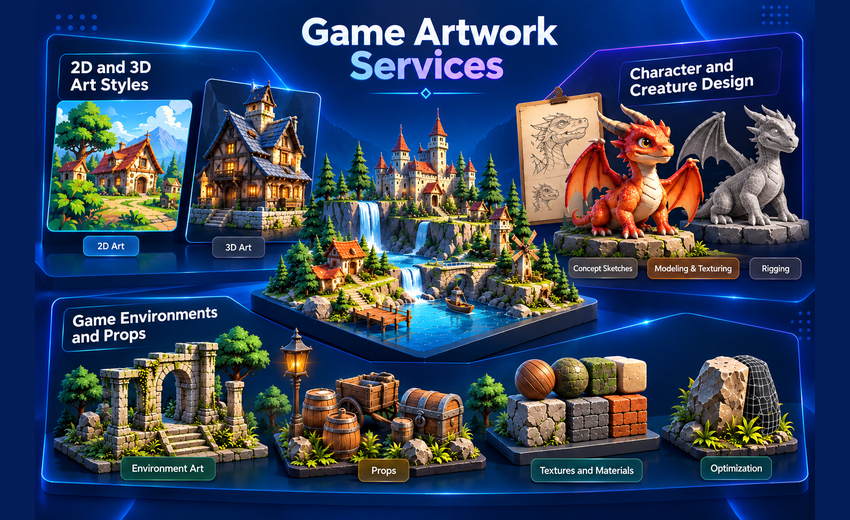
2D and 3D Game Art Styles
The right art style gives a game its own identity. It should match the gameplay, target audience, and overall design.
- 2D art: Creates sprites, illustrations, and backgrounds.
- 3D art: Builds models with depth and volume.
- Stylized art: Uses simplified shapes and distinctive colours.
- Realistic art: Focuses on lifelike details and materials.
Both styles work well when they suit the game's requirements and run smoothly on the intended platform.
Character and Creature Design
Characters help players connect with a game's story. Their appearance should match their personality, role, and place within the game world.
- Concept sketches: Establish appearance and personality.
- Character modelling: Turns designs into finished 2D or 3D assets.
- Texturing: Adds colours, patterns, and surface details.
- Rigging: Prepares 3D characters for movement and animation.
Well-planned designs keep characters recognizable across different scenes, animations, and gameplay situations.
Game Environments and Props
Environments and props give players places to explore and objects to interact with. They also help establish the game's setting.
- Environment art: Creates forests, cities, rooms, and landscapes.
- Props: Includes furniture, tools, weapons, and treasure chests.
- Textures and materials: Define the appearance of different surfaces.
- Optimization: Helps assets run smoothly within technical limits.
A reliable Game Artwork Company can manage these assets through an organized Game Art Production process. Expert 3D Game Art Services ensure a uniform visual style throughout the entire project.
How Can 3D Art Enhance the Gaming Experience?
3D art adds depth through detailed models, textures, lighting, and environments. These elements help players understand their surroundings and enjoy exploring the game world.
Detailed Characters and Environments
Characters and environments help players recognize locations, understand the story, and connect with the game. Small visual details can make fictional places more believable.
- Character details: Facial expressions, clothing, and movement show personality.
- Environment design: Buildings, landscapes, and props establish each location.
- Visual consistency: Matching art styles keeps assets connected.
- Gameplay support: Clear shapes help players recognize objects and important paths.
- Storytelling: Visual clues can reveal a location's history or purpose.
Good artwork supports gameplay instead of distracting players. Clear designs make exploration easier and help important objects stand out.
Textures, Lighting, and Visual Depth
Textures and lighting change how players see objects and environments. They help distinguish materials, set the mood, and make important details easier to notice.
- Textures: Show differences between wood, metal, stone, and fabric.
- Lighting: Creates atmosphere and draws attention to important areas.
- Shadows: Help objects appear grounded within the environment.
- Material details: Reflections and surface roughness create different finishes.
- Performance: Keeps the game running smoothly on compatible devices.
For example, warm lighting can make a village feel welcoming, while darker lighting can make an abandoned building feel unsettling.
Stylized vs. Realistic 3D Art
The best art style depends on the game's theme, audience, budget, and target hardware. Both approaches work when they suit the project's needs.
- Stylized art: Uses distinctive shapes and colours for a recognizable look.
- Realistic art: Focuses on lifelike proportions, materials, and lighting.
- Performance needs: Detailed assets may require more memory and processing power.
- Art consistency: Characters, props, and environments should follow the same visual direction.
- Project goals: Choose a style that supports gameplay instead of following trends.
A clear art direction helps studios balance visual quality, development time, and performance.
Game Artwork Services can cover 3D Game Art, 3D Game Environments, and Game Graphics Design. The right combination depends on the game's visual direction and production requirements.
How Much Do Game Artwork Services Cost in Canada?
Game artwork costs depend on the art style, asset complexity, animation needs, and production timeline. Each project requires a different budget based on its requirements.
Studios should define their artwork needs before requesting quotes. This helps them understand the scope, compare service providers, and plan their budgets without relying on general price estimates.
Factors That Affect Game Art Costs
Every project has different requirements, so understanding the main cost factors helps studios plan their budgets more carefully.
- Art style: Realistic assets may require more detail than simple stylized designs.
- Asset complexity: Characters, environments, and props need different amounts of work.
- Animation: Rigging, movement, and testing add production time.
- Revisions: Changes after approval can increase costs.
- Project size: More assets usually require additional time and resources.
A clear project brief helps artists estimate the work accurately. Include references, asset quantities, technical requirements, deadlines, and expected deliverables.
For example, a project requiring a few simple props will generally cost less than one needing detailed characters, custom environments, and animated assets. Request an itemized quote to understand where the budget will go.
3D Character Modeling Costs
The cost of 3D character modelling depends on the design, level of detail, animation requirements, and intended use.
- Simple characters need fewer modelling and texturing details.
- Realistic characters require more work on materials and surface details.
- Animated characters need rigging, testing, and movement adjustments.
- Custom designs may require additional sketches and revisions.
The overall Game Development Cost also includes programming, gameplay features, testing, and other production tasks. Request a separate artwork estimate to understand how much the art will contribute to the full budget.
When comparing quotes, check whether the price includes concept art, modelling, texturing, rigging, revisions, and final files. This helps you compare similar services rather than choosing by price alone.
Outsourcing vs. In-House Production
Studios can hire an internal art team or outsource artwork to external artists. The right option depends on budget, workload, and long-term requirements.
| Factor | Outsourcing | In-house |
| Initial costs | Usually project-based | Salaries, equipment, and software |
| Flexibility | Easier to add specialists | Depends on team size |
| Control | Requires clear communication | Direct daily supervision |
Compare Game Art Outsourcing Prices, 3D Modeling Costs, and the services offered in each proposal. A reliable Game Artwork Company should explain its deliverables, revisions, deadlines, and pricing clearly.
A Game Development Company may also help coordinate artwork with programming and testing. Compare the full scope of work instead of choosing a provider based on price alone.
When Should You Outsource Game Art Production?
Outsourcing game art makes sense when your team needs specialist skills, extra production support, or help meeting deadlines.
For growing studios, Game Artwork Services in Canada provide flexible support without requiring a permanent art team for every task.
Benefits of Game Art Outsourcing
External artists can handle artwork while internal teams focus on gameplay, programming, and project management. This method works best when everyone knows their role.
- Access specialists in modelling, texturing, and character design.
- Increase production capacity when workloads grow.
- Reduce the need for permanent hires.
- Get support for selected assets or complete art requirements.
Set the project scope, budget, deadlines, and number of revisions before starting the work.Clear expectations help both teams avoid delays and unnecessary rework.
Support for Indie Game Developers
Small studios often have limited budgets and fewer in-house specialists. Outsourcing selected art tasks helps them access extra skills without hiring full-time staff.
- Create characters, props, and environments.
- Fill gaps in the team's artistic skills.
- Keep internal resources focused on gameplay.
- Choose support that fits the available budget.
Game Art Outsourcing for Indie Developers can help small teams manage workloads while keeping production costs under control. Start with the assets your game needs most.
Managing Quality and Deadlines
Clear communication and regular reviews help outsourced artwork match project requirements. Checking assets early also prevents problems from affecting later development stages.
- Share reference images and a clear art guide.
- Agree on milestones, review dates, and delivery deadlines.
- Check artwork at each major production stage.
- Test assets inside the target game engine.
When comparing Game Art Outsourcing Canada providers, check their communication process, technical experience, and ability to meet your requirements.
For example, a team can first approve a character sketch, then review the model, check textures, and test the rig before accepting the final asset. This process catches issues before they require expensive changes.
How Do You Choose the Right Game Art Studio?
Choosing a studio means finding a team that understands your game's visual style, technical needs, budget, and deadlines.
When comparing Game Artwork Services in Canada, look beyond attractive samples. Check the team's working process, technical skills, and experience with similar projects.
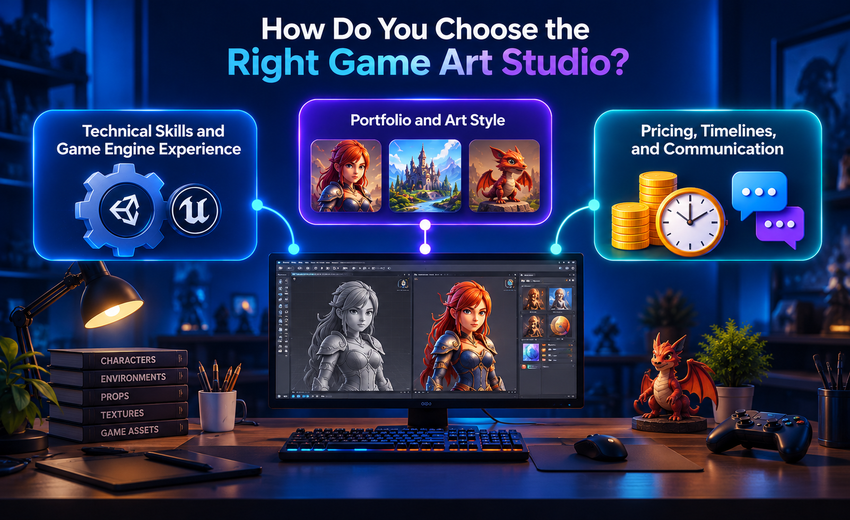
Portfolio and Art Style
A portfolio shows the quality and range of a studio's previous work. Reviewing relevant projects helps you decide whether its style suits your game.
- Review characters, environments, props, and textures.
- Check whether the artwork matches your visual direction.
- Look for consistent quality across different assets.
- Review the Game Art Portfolio for relevant examples.
- Ask for work similar to your project requirements.
Choose a team that understands your vision and can explain how it will approach your artwork requirements.
Technical Skills and Game Engine Experience
Game artwork must look right and work properly inside the chosen engine. Technical mistakes can create extra work during integration and testing.
- Check experience with Unity or Unreal Engine.
- Ask about modelling, texturing, rigging, and optimization.
- Confirm that assets meet your technical specifications.
- Review polygon counts, texture sizes, and file formats.
- Ask how the team handles revisions and testing.
A capable 3D Game Art Company should understand both visual requirements and technical limits. This helps prevent avoidable problems when assets enter the game.
Pricing, Timelines, and Communication
Clear pricing and realistic deadlines help both teams plan their work. Before signing an agreement, confirm the deliverables, payment terms, and revision limits.
- Request a detailed project estimate.
- Confirm deliverables, revisions, and payment terms.
- Agree on milestones and delivery dates.
- Ask how progress updates and feedback will be handled.
- Compare each Game Artwork Company based on its services and production process.
A written agreement helps everyone understand their responsibilities. It also makes progress easier to track and gives both teams a clear way to resolve issues.
Conclusion
Choosing the right studio starts with clear requirements, a suitable budget, and a portfolio that matches your vision. Compare technical skills, communication, and delivery terms before making your decision.
Planning a game project? Contact Gamecrio Studios to discuss your artwork requirements, explore suitable services, and request a quote based on your project's scope and budget.
Frequently Asked Questions
1. What should I look for in a game art studio?
Review its portfolio, art style, technical skills, game engine experience, pricing, and delivery timelines.
2. How do I evaluate a game art studio's portfolio?
Check its character designs, environments, props, textures, and consistency with your game's visual style.
3. Does a game art studio need Unity or Unreal Engine experience?
Yes. Engine experience helps ensure assets meet technical requirements and integrate smoothly into your game.
4. How much do game artwork services cost?
Costs depend on asset complexity, art style, animation needs, project scope, and deadlines. Request a detailed quote.
5. How can I compare game art companies before hiring?
Compare portfolios, technical expertise, deliverables, revision policies, communication, pricing, and timelines before making a decision.