
A game starts with an idea, but turning that idea into a finished game takes planning, design, development, artwork, testing, and the right technology.
A Game Development Company helps businesses, startups, and game creators turn their ideas into playable games. Depending on the project, a company can handle everything from game design and programming to art, testing, launch, and post-launch support.
If you are planning to build a game, understanding the services, development process, cost factors, and technology options can help you choose the right development partner.
What Is a Game Development Company?
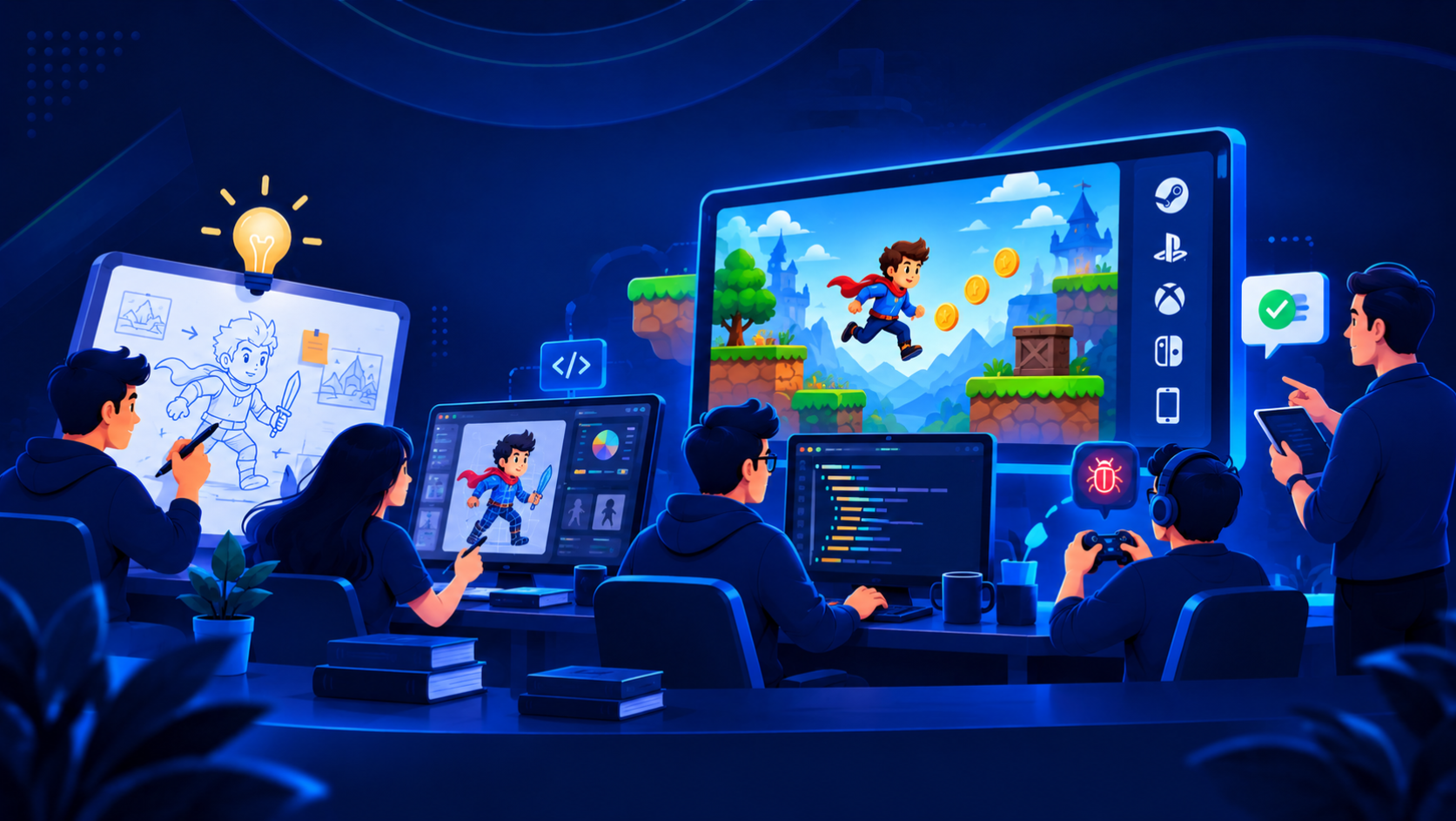
A game development company is a team that creates games for mobile, PC, console, web, or other platforms.
A typical team may include:
- Game designers
- Game developers
- 2D and 3D artists
- Animators
- UI/UX designers
- QA testers
- Backend developers
- Project managers
The size of the team depends on the game. A simple mobile game may need only a few people, while a large multiplayer game can require specialists from several areas.
Game Development Services
A game development company can provide different services based on the needs of your project.
1. Game Design and Development
Game design defines how the game works. It covers the gameplay, rules, levels, characters, controls, and player progression.
Development turns that plan into a playable game. Developers build features such as:
- Character movement
- Game mechanics
- AI
- Combat systems
- Inventory
- Scoring
- User interfaces
- Save systems
- Backend features
The goal is to make the game work as planned while keeping it easy and enjoyable to play.
2. 2D Game Development
2D Game Development is commonly used for puzzle, arcade, platform, card, casual, educational, and strategy games.
It can include:
- 2D gameplay systems
- Character movement
- Level design
- Animations
- UI
- Effects
- Game mechanics
A 2D game can be simple or highly detailed. The development work depends on the number of features, levels, characters, and systems involved.
3. 3D Game Development
3D game development is used when the game needs three-dimensional characters, environments, objects, or gameplay.
It may involve:
- 3D characters
- Environments
- Props
- Animation
- Lighting
- Physics
- Visual effects
- AI systems
The complexity of the game, visual quality, number of assets, and gameplay features all affect the amount of work required.
4. Multiplayer Game Development
Multiplayer games need more than regular gameplay. Players must be able to connect, interact, and receive the right game data at the right time.
A multiplayer project may require:
- Player accounts
- Matchmaking
- Lobbies
- Real-time communication
- Leaderboards
- Server systems
- Data storage
- Security
Multiplayer games also need more testing because problems can appear when many players connect at the same time.
5. Game Artwork Services
Game artwork gives the game its visual identity. It can include characters, environments, props, icons, interfaces, animation, and visual effects.
For 2D projects, 2D Game Artwork may include characters, backgrounds, UI elements, icons, and other game assets.
For 3D projects, 3D game artwork can include characters, environments, props, models, textures, materials, and animations.
Good artwork should match the game's style and work well with its gameplay.
6. QA, Testing and Post-Launch Support
Testing should be done during development, not just before launch.
QA teams check for:
- Bugs and crashes
- Gameplay problems
- Device compatibility
- Performance issues
- UI problems
- Multiplayer issues
- Audio and visual errors
After launch, the development team may continue working on bug fixes, updates, new content, performance improvements, and platform support.
What Types of Games Can a Game Development Company Build?
The type of game you choose will affect its design, technology, artwork, and development requirements.
Casual and Hyper-Casual Games
These games often use easy controls and brief gameplay sessions. They are often designed for mobile users and focus on quick, easy-to-understand gameplay.
RPG and Strategy Games
RPGs can include characters, stories, quests, combat, items, and progression systems.
Strategy games focus more on planning, resources, decision-making, and competition.
Sports Games
Sports games can recreate real or fictional sports. They may include player controls, physics, team systems, competitions, and multiplayer features.
Card Games
Card games can be simple single-player experiences or include online multiplayer, rankings, rewards, and other features.
Casino and Slot Games
Casino games and slot games require careful planning of gameplay mechanics, mathematics, animations, sound, and platform requirements.
Casino Slot Game Development may also require specific technical and compliance considerations depending on the target market.
Which Technology Should You Use for Game Development?
The right technology depends on your game, platform, visual requirements, and team.
Unity
Unity game development is widely used for mobile, 2D, 3D, and cross-platform games. It can be a good option if you plan to launch your game on multiple platforms.
Unreal Engine
Unreal Engine is often chosen for projects that need detailed 3D visuals, advanced lighting, realistic environments, or complex gameplay.
Other Game Engines
Other engines can also be suitable for smaller games or projects with specific requirements.
The best engine is not always the most powerful one. It should be the one that fits your game's actual needs.
What Is the Game Development Process?
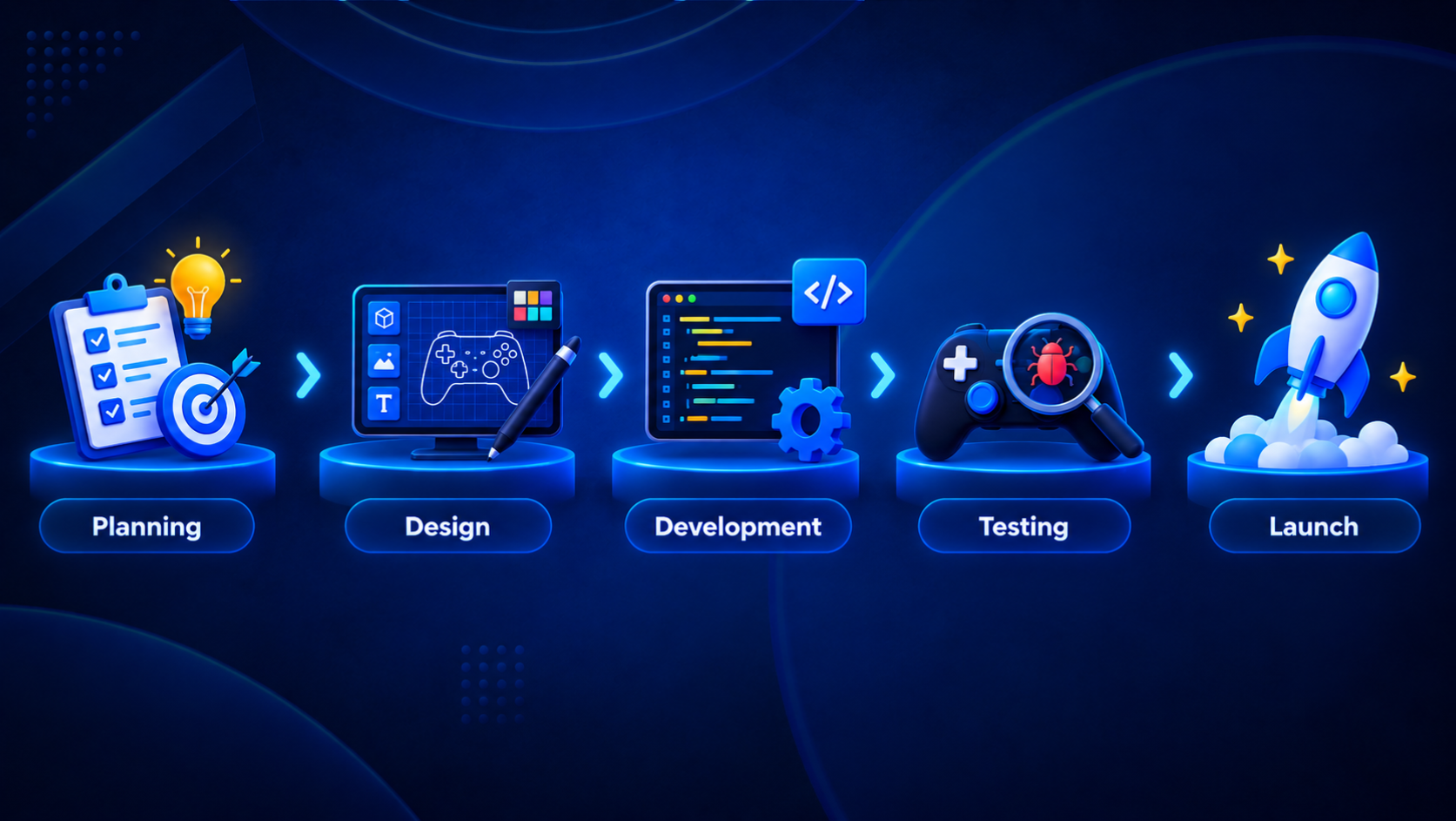
While every project is different, most games follow a similar development path.
1. Planning
The team defines the game idea, target audience, genre, platform, main features, and project goals.
2. Design and Prototype
The core gameplay is planned and a prototype may be created. This helps test whether the main idea works before full development begins.
3. Production
Developers build the game while artists create characters, environments, UI, animations, and other assets.
4. Testing
The game is tested on the required devices and platforms. Bugs, performance problems, and gameplay issues are fixed.
5. Release
After final testing and optimization, the game is prepared for release on the selected platforms.
6. Post-Launch
The team can provide updates, bug fixes, new features, content, and performance improvements after launch.
How Much Does Game Development Cost in 2026?
There is no single cost for developing a game. The final game development cost depends on what you want to build.
The main factors include:
- Game genre
- Number of features
- 2D or 3D development
- Number of characters and environments
- Artwork and animation requirements
- Multiplayer features
- Backend requirements
- Number of platforms
- Testing requirements
- Project timeline
- Post-launch support
A small game with limited features will usually require less work than a large game with complex gameplay, detailed artwork, multiplayer, and multiple platforms.
What Can Increase Development Cost?
The project can become more expensive when you add more levels, characters, animations, advanced gameplay systems, multiplayer features, platforms, or custom artwork.
Changes made late in development can also add extra work. This is why it is useful to define the main scope before development starts.
How to Get a Better Cost Estimate
Before asking a company for an estimate, prepare basic information about:
- Game genre
- Target platform
- 2D or 3D style
- Main gameplay
- Required features
- Number of levels
- Art style
- Multiplayer requirements
- Launch plans
The clearer your requirements are, the easier it is for a development company to prepare a useful estimate.
How Long Does Game Development Take?
Development time depends on the size and complexity of the game.
A project can take longer when it includes:
- Many levels
- Detailed 3D artwork
- Complex gameplay
- Multiplayer
- Backend systems
- Multiple platforms
- Extensive testing
Instead of choosing a timeline first, define the game scope first. The development team can then provide a more realistic schedule.
Mobile, PC or Console: Which Platform Should You Choose?
Your target platform should match your audience and game type.
Mobile: Good for games designed around touch controls and shorter play sessions.
PC: Useful for games that need keyboard, mouse, or controller support and more detailed settings.
Console: Best for projects designed around console controls and platform-specific requirements.
Cross-platform: Lets you release the game on multiple platforms but usually requires additional development and testing.
If you already know that you want multiple platforms, it is better to plan for them from the beginning.
How to Choose the Right Game Development Company
Choosing the right company can have a major effect on your project.
Before you choose a company, check these important points:
Check Their Portfolio
Look for games similar to your project. A company that has worked on similar genres or platforms may understand your requirements better.
Check Their Team
Ask who will work on your project and whether they have the required development, art, design, and testing skills.
Ask About Communication
Find out how often you will receive updates and who will be your main contact.
Understand Ownership
Make sure the agreement clearly explains ownership of the game's code, artwork, assets, and other project files.
Check Testing and Support
Ask how the company handles QA, bug fixing, updates, and support after launch.
What Makes a Game Project Ready for Development?
Before development starts, a few decisions can save time and prevent major changes later.
| Project Area | Decide This First |
| Target Player | Who will play it? |
| Game Goal | What should players achieve? |
| Main Loop | What will players do again and again? |
| USP | What makes your game different? |
| Launch Version | What must be ready on day one? |
| Success Goal | Downloads, players, sales, or engagement? |
| Future Plans | What may be added later? |
A clear answer to these questions gives the development team a better understanding of the game before work begins.
When Should You Hire a Game Developer?
The right hiring option depends on your project.
For a small game, hiring a game developer may be enough if the project has limited features and artwork requirements.
For a larger game, you may need several specialists, such as developers, designers, artists, animators, backend developers, and testers.
If the game includes multiplayer, custom artwork, complex systems, or several platforms, working with a full development team can make the process easier.
Why Choose Gamecrio for Game Development?
Gamecrio provides game development and game art services for different types of gaming projects.
According to the company, Gamecrio has:
- 10+ years of experience
- 350+ gaming projects delivered
- 300+ games launched
- 1M+ downloads
- 140+ team members
The company works across game development, game art, 2D and 3D projects, and other gaming requirements.
If you are comparing development companies, review the portfolio and discuss your project requirements before making a decision.
What Should You Prepare Before Starting a Game Project?
You do not need to have every detail ready before contacting a development company. However, having the basics can make the discussion much easier.
Prepare:
- Your game idea
- Game genre
- Target audience
- Target platform
- Main gameplay
- Important features
- 2D or 3D requirements
- Art style
- Multiplayer requirements
- Expected launch scope
Even a simple game concept can be enough to start the conversation.
Final Thoughts
Building a game includes much more than programming. Design, artwork, development, testing, technology, and post-launch support all play a role in the final product.
The best approach is to define your game idea and main requirements first, then choose a development team with relevant experience. A clear scope also makes it easier to plan the development process, timeline, and overall budget.
Whether you are planning a small mobile game or a larger multiplayer project, choosing the right Game Development Company can help turn your idea into a playable product.
Ready to Build Your Game?
Have a game idea in mind?
Share your concept with Gamecrio and discuss the right development approach for your project.
FAQs
What does a game development company do?
A game development company creates games for platforms such as mobile, PC, console, and web. Its services can include design, programming, artwork, testing, launch, and post-launch support.
What are the main game development services?
Common services include game design, 2D and 3D development, multiplayer development, game art, animation, QA testing, and post-launch support.
What affects game development cost?
Game development cost depends on the game's features, genre, art requirements, platforms, multiplayer systems, backend, testing, and development time.
How Much Time Does It Take to Build a Game?
The timeline depends on the game's scope. A simple game can require less development work, while games with complex systems, detailed artwork, multiplayer, or multiple platforms can take much longer.
Is Unity good for game development?
Yes. Unity can be a good choice for many 2D, 3D, mobile, and cross-platform games. The right engine depends on the project's requirements.
Does multiplayer make a game harder to develop?
Yes. Multiplayer adds systems such as networking, matchmaking, servers, player accounts, synchronization, and additional testing.
Should I hire a developer or a full game development company?
For a small project, one developer may be enough. Larger games usually need several specialists, so a full development team can be a better option.
Can a game development company also create game artwork?
Yes. Many companies provide game artwork along with development. This can include characters, environments, props, UI, animation, and visual effects.