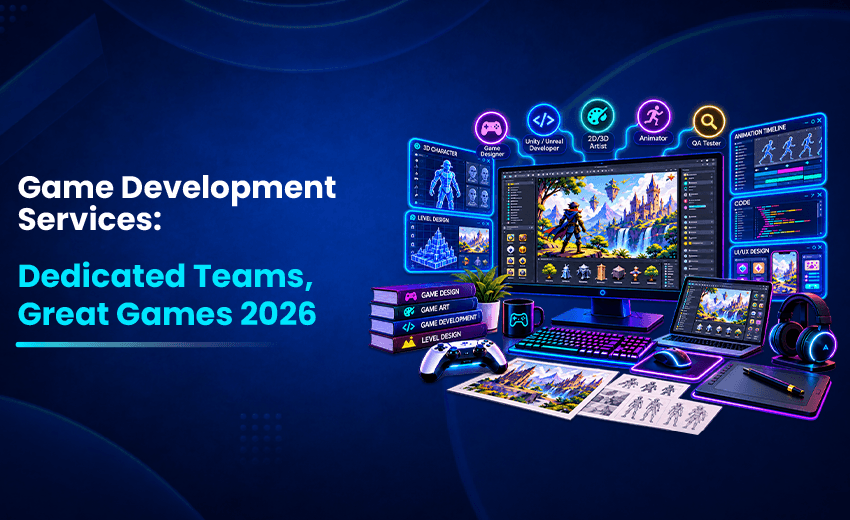
Games bring stories, creativity, and technology together to create memorable experiences for players. This blog covers the key services, tools, costs, and steps involved in turning an idea into a finished game.
Here’s what this blog covers:
- Different types of services available for game creation
- Differences between 2D and 3D games
- Art, animation, and visual effects essentials
- Choosing the right engine and platform
- Estimated budgets and development timelines
- Key stages from planning to launch
- Tips for selecting a suitable development partner
The right choices at each stage can help you build a game that meets your goals and delivers an enjoyable player experience.
What Are Game Development Services and Why Do They Matter?
Game Development Services cover the work needed to turn a game idea into a playable product that people enjoy.
They matter because planning, design, coding, and testing must work together to prevent bugs, delays, and unnecessary costs.
What Does a Game Development Team Actually Do?
A game development team divides tasks so each person can focus on their area of expertise.
- Game designers plan rules, levels, and player goals
- Artists create characters, environments, and interface visuals
- Programmers build features, controls, and game logic
- QA testers identify bugs before players encounter them
Together, these roles turn a concept into a playable game while keeping development organized.
Which Services Are Needed to Build a Complete Game?
A complete game requires several connected services, not just coding and artwork.
- Concept planning and game design documentation
- 2D and 3D art, animation, and sound
- Programming for mobile, PC, or console
- Testing, launch support, and post-release updates
Each service addresses a different production need, helping prevent problems caused by missing steps.
Can One Company Handle Game Art and Development?
Yes, a full-service game development company can bring artists, developers, and QA testers together under one team.
- Game development services combine art, coding, and testing in one place
- Custom game development builds features around your specific requirements
- Full-cycle game development supports projects from concept to launch
- Close collaboration helps teams resolve feedback faster
Working together keeps the game's visuals, code, and schedule aligned throughout production.
Strong collaboration across design, art, coding, and testing helps studios deliver polished games within realistic budgets and timelines.
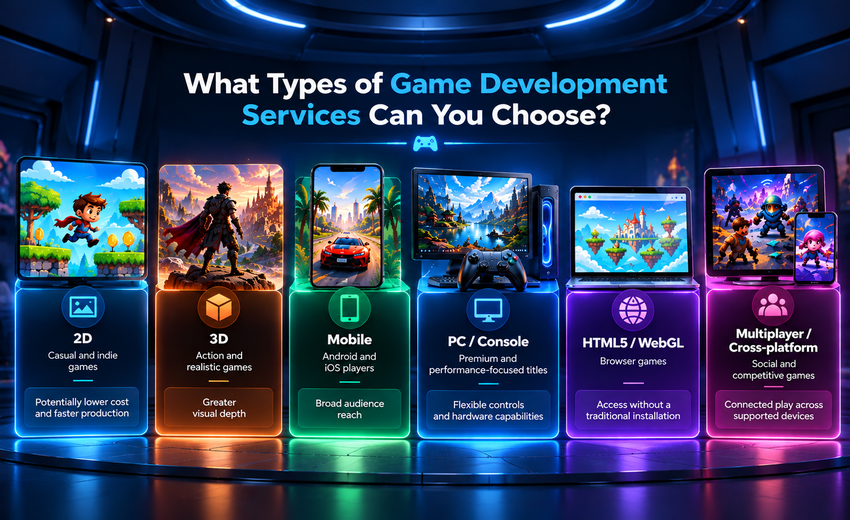
What Types of Game Development Services Can You Choose?
Every game idea needs a different development approach. Your audience, budget, and target devices help determine which services fit your project.
Understanding these options early helps you plan effectively, reduce rework, and compare game development companies more confidently.
What Is the Difference Between 2D and 3D Game Development?
Both styles work well, but they differ in visual presentation, production effort, and cost.
- 2D uses flat artwork with side-view or top-down perspectives
- 3D adds depth, lighting, and camera movement
- 2D games can be more affordable when their mechanics and artwork are simple
- 3D suits realistic environments, immersive worlds, and complex action games
Choose 2D for simpler visual requirements and potentially faster production, or 3D when your gameplay benefits from depth and spatial detail.
Which Platforms Can Your Game Support?
Your target platform influences controls, performance requirements, development costs, and how players access your game.
- Mobile game development covers Android and iOS applications
- PC supports flexible controls and a wide range of graphics settings
- Console development targets platforms such as PlayStation, Xbox, and Nintendo Switch
- HTML5 supports lightweight games that run directly in a browser
- WebGL enables browser-based 3D graphics through compatible web technologies
Start with the platform your target audience uses most, then consider expansion based on performance and demand.
When Do You Need Multiplayer or Cross-Platform Development?
Multiplayer and cross-platform features are useful when your game depends on social interaction, competition, or shared progress.
- Multiplayer development can include networking, matchmaking, and chat
- Multiplayer suits co-op gameplay, PvP matches, and live events
- Cross-platform development allows players on different supported devices to play together
- Account synchronization keeps player progress consistent across supported platforms
Include these features when they strengthen the core gameplay, since networking and synchronization add development and testing requirements.
Can You Upgrade or Port an Existing Game?
Yes, existing games can often reach new audiences through porting, optimization, or feature updates without rebuilding everything.
- Port a PC game to console or mobile
- Adapt a compatible game for browser play using suitable web technologies
- Refresh graphics, controls, and menus
- Fix bugs and improve performance
A technical assessment helps determine which parts of the original game can be reused and which need rebuilding.
Here is a quick comparison of game development services by type:
| Service Type | Best For | Main Advantage |
| 2D | Casual and indie games | Potentially lower cost and faster production |
| 3D | Action and realistic games | Greater visual depth |
| Mobile | Android and iOS players | Broad audience reach |
| PC / Console | Premium and performance-focused titles | Flexible controls and hardware capabilities |
| HTML5 / WebGL | Browser games | Access without a traditional installation |
| Multiplayer / Cross-platform | Social and competitive games | Connected play across supported devices |
The right services match your idea, audience, and budget, so compare each option before production begins.
 What iGaming and Casino Game Development Services Do You Need?
Casino game development services help online gaming products deliver reliable gameplay, secure transactions, and consistent performance across supported devices.
Choosing suitable iGaming services also helps teams plan integrations, testing, and applicable licensing requirements before launch.
How Does Casino Game Development Work?
Casino game development follows defined stages, from initial planning to release and ongoing maintenance.
- Market and regulatory research
- Game mathematics and design
- Development and testing
- Launch and ongoing updates
A structured process helps control scope, identify risks early, and reduce unexpected work before release.
What Types of Casino Games Can You Develop?
Different casino game types require different mechanics, technical features, and testing approaches.
- Slot and crash games
- Bingo and poker games
- Card games and Chicken Road-style games
- Multi-game casino applications
Compare the options below to identify the mechanics and features your project requires.
| Casino Game Type | Gameplay Mechanics | Development Features |
| Slot Game Development | Spin reels and match symbols | RNG, paylines, bonus rounds, RTP configuration |
| Crash Game Development | Cash out before a rising multiplier ends | Real-time systems and fairness verification |
| Bingo Game Development | Match called numbers | Ticket generation, chat rooms, jackpots |
| Poker Game Development | Bet, bluff, and compete against opponents | Multiplayer tables and anti-collusion measures |
| Card Game Development | Rummy or blackjack-style rounds | Dealing logic, tournaments, leaderboards |
| Chicken Road Game Development | Move through increasing-risk rounds | Multiplier logic and responsive interfaces |
| Multi-Game App Development | Access multiple games through one application | Shared accounts, wallet integration, game lobby |
What Is Involved in Slot, Crash, Bingo, and Poker Game Development?
Each casino game needs appropriate mathematics, interface design, and fairness checks from the beginning.
- Slots: RTP configuration, paylines, and bonus mechanics
- Crash: multiplier logic and verifiable fairness mechanisms
- Bingo: ticket generation, number calling, and chat features
- Poker: multiplayer tables, game rules, and anti-fraud measures
Matching technical features to the game mechanics helps keep development focused and gameplay consistent.
What Do Casino Games Need for Testing, Integration, and Maintenance?
Casino games require thorough testing before launch and continued technical support afterward.
- RNG and RTP testing, including independent certification where required
- Payment gateway and API integration
- Applicable licensing, KYC, and responsible gaming measures
- Security patches, maintenance, and game updates
Requirements vary by jurisdiction and game type, so legal and compliance checks should be completed before launch.
A capable casino game development company combines technical expertise, appropriate testing, and ongoing support to meet the specific needs of your project.
How Do Game Art, Animation, and VFX Improve a Game?
Visuals influence how players understand and experience a game. Good development brings art, animation, and visual effects together to create a consistent experience.
Each creative layer, from initial sketches to final polish, helps communicate the game world and make gameplay more engaging.
What Goes Into 2D and 3D Game Art?
Game art begins with visual concepts and develops into finished assets ready for implementation.
- Concept art establishes the visual style and direction
- Pixel art supports retro-style and lightweight games
- Vector art provides scalable graphics for different screen sizes
- 3D modeling creates characters, props, vehicles, and environments
Professional game art services help maintain visual consistency while keeping assets suitable for the target platform.
How Do Character Design and Environment Art Shape Gameplay?
Players often recognize characters and understand their surroundings before reading instructions.
- Distinct character silhouettes help players identify enemies quickly
- Color-coded areas guide players through different spaces
- Recognizable landmarks make navigation easier
- Lighting helps communicate danger, focus, or safety
Thoughtful visual design makes gameplay easier to understand and reduces unnecessary on-screen instructions.
Why Does Game UI/UX Matter?
Menus, buttons, and heads-up displays (HUDs) are essential parts of the player experience.
- Clear health bars communicate player status quickly
- Appropriately sized buttons improve mobile usability
- Simple menus make navigation easier
- Readable fonts improve accessibility on smaller screens
Good UI/UX design helps players focus on gameplay instead of struggling with controls or navigation.
How Do Animation and Visual Effects Make Games More Engaging?
Game animation brings characters, objects, and interfaces to life through movement and feedback.
- Spine supports skeletal animation for 2D characters
- Rive enables interactive animations for supported interfaces
- 3D animation creates character movements, attacks, and reactions
- Visual effects such as sparks and flashes provide feedback for in-game actions
Well-timed animation and effects make player actions easier to understand and more satisfying.
Together, art, interface design, and motion shape the player experience, bringing these elements into one cohesive product.
Which Game Engine and Platform Should You Choose?
Choosing the right engine and platform early can save time, money, and rework. The wrong choice may create avoidable technical limitations later.
A suitable development approach considers your gameplay, budget, and audience before selecting tools.
Unity and Unreal Engine are game engines, while HTML5 and WebGL are web technologies used to build or deliver browser-based experiences. Here is how they compare:
| Factor | Unity | Unreal Engine | HTML5 / WebGL |
| Type | Game engine | Game engine | Web technologies |
| Best For | Mobile, 2D, indie games | High-end 3D, PC, console | Casual and browser-based games |
| Budget | Varies by scope | Varies by scope | Often suitable for lightweight projects |
| Performance | Flexible across supported platforms | Strong high-end graphics capabilities | Depends on browser and device capabilities |
Is Unity or Unreal Engine Better for Your Game?
Unity suits many mobile and indie projects, while Unreal Engine is often chosen for visually demanding 3D games.
- Unity supports 2D, mobile, and many cross-platform projects
- Unity offers a broad asset ecosystem and accessible development workflows
- Unreal Engine uses Blueprints and C++ for building complex game systems
- Unreal projects may require greater technical resources for demanding visual features
Choose the engine based on gameplay requirements, team experience, performance targets, and budget rather than graphics alone.
Should You Build for Android, iOS, PC, or Console?
Your target audience should guide your platform choice, along with technical requirements and distribution plans.
- Android offers broad device reach but requires testing across different hardware configurations
- iOS supports a more controlled device ecosystem and in-app purchasing
- PC allows flexible hardware configurations and graphics settings
- Console development involves platform-specific requirements, approvals, and performance testing
- Cross-platform development can extend a game to multiple supported devices
Start with your primary audience and platform, then expand when the game and budget support it.
When Are HTML5 and WebGL the Right Choice?
Browser-based games work well when players want quick access without downloading a traditional application.
- Players can open a supported link and start playing
- Suitable for casual, puzzle, and promotional games
- Web updates can be deployed without traditional app-store release cycles
- Complex 3D graphics and large assets may create browser performance challenges
Choose browser technologies for convenient access and suitable gameplay rather than assuming every game will perform equally well on the web.
How Does Your Platform Choice Affect Game Performance?
Each platform has different memory, processor, graphics, and compatibility requirements.
- Mobile devices may heat up or drain batteries during demanding gameplay
- Consoles provide a more consistent hardware environment
- PCs vary widely, requiring flexible performance settings
- Browser performance depends on the device, browser, and available resources
Test early on representative devices to identify performance issues before launch.
Match your game idea, budget, and audience to suitable tools. An experienced team can help evaluate these choices before production starts.
How Much Do Game Development Services Cost in 2026?
Game development projects can cost from a few thousand dollars for a simple prototype to hundreds of thousands of dollars or more for complex commercial games. The final budget depends on scope, platform, and team size.
Pricing depends on gameplay complexity, art quality, integrations, and testing requirements, so a detailed brief helps you compare proposals fairly.
What Factors Affect the Cost of Developing a Game?
Several decisions influence your final budget and development timeline.
- Game complexity, including mechanics, levels, and AI behavior
- Art quality, animation, and asset requirements
- Platform choice: mobile, PC, console, or web
- Backend, multiplayer, and server requirements
- Testing, launch, and post-release updates
Complex gameplay, custom artwork, and online systems can significantly increase production costs.
How Do 2D, 3D, and Casino Game Costs Differ?
Each game type requires different skills, tools, and testing, which affects the overall budget.
| Game Type | Illustrative Cost (USD) | Key Cost Factors | Possible Timeline |
| 2D Game | 10,000–60,000 | Art, mechanics, and asset count | 3–6 months |
| 3D Game | 50,000–300,000+ | Models, lighting, animation, and complexity | 6–18 months |
| Casino Game | 30,000–150,000+ | Game logic, security, integrations, and compliance | 4–10 months |
Important: The costs and timelines above are illustrative examples for general planning only. They are not verified market prices, industry averages, or fixed quotes. Actual costs vary by project scope, team location, hourly rates, platform, multiplayer requirements, and regulatory obligations. Certification and licensing fees may be additional.
Casino game development costs can increase when projects require specialized testing, independent certification, security measures, or licensing support.
Should You Choose Fixed-Price or Time-and-Material Development?
Your hiring model affects budget predictability and how easily the project can adapt to changes.
- Fixed-price: an agreed scope, budget, and delivery schedule
- Best for small projects with clearly defined requirements
- Time-and-material: payment based on actual work completed
- Best for projects where requirements may evolve
- Dedicated team: a recurring fee for ongoing development resources
Choose fixed-price when requirements are stable, and consider time-and-material when flexibility is important.
How Can You Plan Your Game Development Budget?
A clear budget helps reduce unexpected expenses during development and launch.
- Write a brief that defines the core features
- Build a minimum viable product before expanding the scope
- Keep a 15–20% contingency for unexpected changes
- Request milestone-based estimates
- Reserve funds for updates, maintenance, and marketing
Staged spending lets you validate your idea before committing to full production.
The right development partner provides clear estimates, tracks progress, and aligns spending with your project's actual requirements.
What Are the Steps in the Game Development Process?
Game development follows a structured path from the initial idea to ongoing support. Skipping important stages can lead to delays, defects, and extra costs.
A professional production process organizes the work into planning, design, development, testing, launch, and post-release support.
How Do You Turn a Game Idea Into a Prototype?
Early planning helps determine whether the idea is practical, engaging, and worth developing.
- Concept document covering genre, audience, and core gameplay loop
- Market and competitor research
- Scope, budget, and timeline estimates
- Playable prototype of the main mechanic
A prototype tests the core idea before major production resources are committed.
What Happens During Design, Art, and Development?
After the prototype is approved, the team develops it into a complete, playable experience.
- Game design document covering rules, levels, and in-game economy
- Concept art, 2D and 3D assets, animation, and sound
- Gameplay, UI, and backend programming using suitable technologies
- Regular builds through a structured production pipeline
- Alpha version with the planned core features implemented
Each deliverable supports the next stage, keeping design, art, and programming aligned.
How Are Games Tested Before Launch?
Testing identifies bugs, balance issues, and confusing gameplay before release.
- QA covering functionality, performance, and device compatibility
- Bug reports documenting severity and reproduction steps
- Beta builds for playtesting and feedback
- Release candidate checks before store submission
Thorough testing reduces launch risks and helps protect player satisfaction and reviews.
What Happens After a Game Goes Live?
Launch marks the beginning of ongoing support rather than the end of development.
- Store release with marketing assets and a launch checklist
- LiveOps events, seasonal content, and in-game offers where appropriate
- Patches and hotfixes for reported bugs
- Analytics reports covering retention and revenue
- Content updates, server monitoring, and maintenance
Regular improvements help maintain performance, respond to player feedback, and extend a game's lifespan.
A structured production process helps studios manage each stage, reduce avoidable rework, and deliver games that meet their goals.
How Do You Choose the Right Game Development Company?
Choosing a development studio affects your budget, timeline, and final product quality. Evaluate its capabilities and working process before signing an agreement.
Reliable development partners combine relevant experience, transparent pricing, and clear communication. Use these checks to compare providers.
What Should You Look for in a Game Development Portfolio?
Evaluate completed projects and practical results rather than relying only on promises.
- Try playable builds whenever available
- Check experience with genres similar to your project
- Review genuine player feedback and published results
- Ask for relevant client references when available
A relevant portfolio helps you judge whether a team can handle your game's requirements.
How Do You Compare Development Costs and Timelines?
Game development outsourcing works best when estimates clearly explain the work involved.
- Request itemized pricing for each milestone
- Confirm that timelines include testing and revisions
- Investigate quotes that seem unusually low
- Clarify charges for additional features and scope changes
Compare the proposed deliverables and assumptions, not just the final price.
Should You Hire Freelancers or a Dedicated Game Development Team?
Choose your hiring model according to project size, duration, and required skills.
- Freelancers can suit small projects or specialized tasks
- Dedicated teams can support larger projects with multiple workstreams
- Evaluate communication and reporting practices
- Confirm availability and continuity throughout development
The right model depends on how much coordination, specialization, and ongoing support your project requires.
What Should You Know About Ownership and Post-Launch Support?
Clear contractual terms help protect your project and avoid disputes after delivery.
- Define ownership and transfer of source code
- Agree on the duration and scope of support
- Confirm maintenance and update costs
- Specify delivery of project files and licensed assets
A reliable partner demonstrates relevant skills, explains costs clearly, and provides the agreed support after launch.
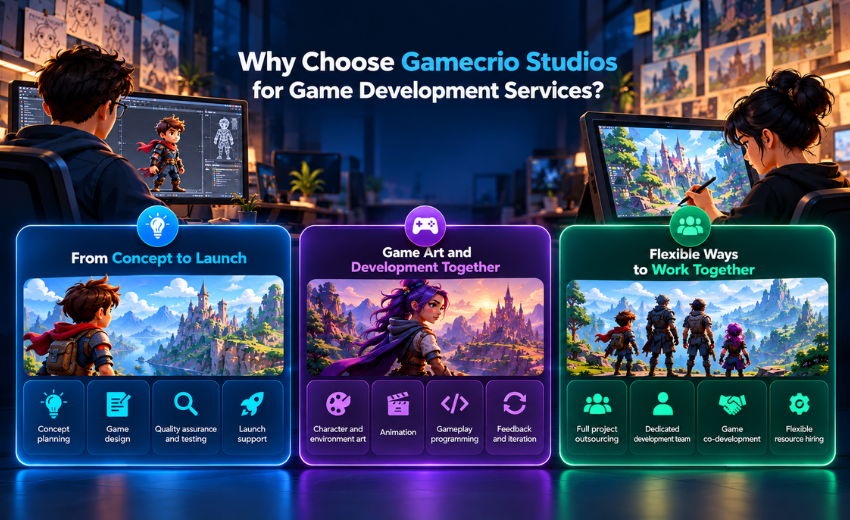
Why Choose Gamecrio Studios for Game Development Services?
Gamecrio Studios provides game development and art services for projects across mobile, web, and PC, with support tailored to different production requirements.
Gamecrio has 8+ years in business, with 1M+ downloads, 300+ games launched, and 350+ gaming projects delivered. Its portfolio can help you assess the team's relevant experience before choosing a development partner.
How Can Gamecrio Support Your Project From Concept to Launch?
Gamecrio can support key production stages, depending on your project's scope and requirements.
- Concept planning
- Game design
- Quality assurance and testing
- Launch support
The required services can be combined to support your project from initial planning through release.
How Do Game Art and Development Work Together?
Close coordination between artists and developers helps ensure that visuals support gameplay and technical requirements.
- Character and environment art
- Animation
- Gameplay programming
- Feedback and iteration
This collaborative approach helps teams address asset requirements, performance constraints, and visual consistency during development.
How Can You Start Your Next Game Development Project?
Choose a working model that matches your budget, timeline, and internal resources.
- Full project outsourcing
- Dedicated development team
- Game co-development services
- Flexible resource hiring
Share your game concept, target platform, key features, and expected timeline to discuss a suitable development approach.
Contact Gamecrio Studios to discuss your requirements and explore how the team can help bring your game idea to life.
Conclusion
Creating a good game takes clear planning, the right tools, and a team that understands your idea. From choosing the game style to designing characters and building gameplay, every step helps make the game better.
With the right approach, you can turn your idea into a game that players enjoy.
Have a game idea you want to build? Contact Gamecrio Studios to discuss your project and find the right way to get started
Frequently Asked Questions
How Long Does It Take to Develop a Game?
Development time depends on scope and complexity. A simple 2D game may take three to six months, while larger 3D projects can take a year or longer.
Can One Company Handle Complete Game Development?
Yes. A full-service studio can handle game design, programming, art, testing, and launch support, allowing you to coordinate with one team.
What Is the Difference Between Game Design and Game Development?
Game design defines the concept, rules, mechanics, and player experience. Game development turns that design into a working game through programming, asset integration, and testing.
How Much Does It Cost to Hire a Game Development Team?
Costs depend on the genre, platform, features, and team size. For example, a small 2D project might be budgeted at 10,000–60,000, while complex games may exceed $200,000. These figures are illustrative examples only, not verified market prices or fixed quotes.
Can a Game Development Company Maintain a Game After Launch?
Yes. A game development company can provide bug fixes, updates, new content, performance monitoring, and server maintenance according to the agreed support scope.