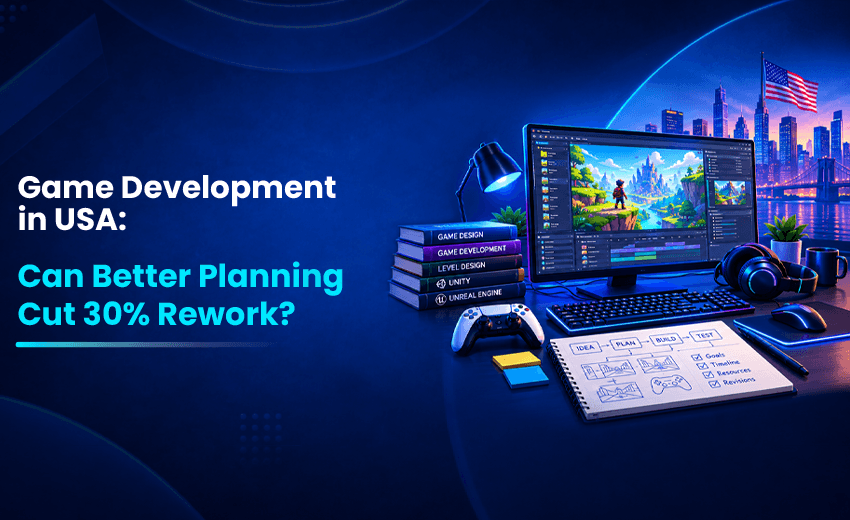
A great game idea can still lose time and money when important decisions are made too late. Game Development in USA needs careful planning before production begins.
- Define requirements clearly
- Test important ideas early
- Keep art and development aligned
- Review progress regularly
- Prepare for launch early
The earlier these decisions are handled, the easier it becomes to keep development focused and avoid unnecessary rework.
Why Does Game Rework Happen?
Game rework means redoing work that was already finished. In Game Development in USA, it quietly burns time and money.
Most rework is not caused by bad developers. It usually starts with small gaps in the game development process.
Rework Starts Small
A small gap early in production can become a major fix later. Here are the main reasons why it happens:
Changing Game Features Too Late
Late feature changes can force teams to rebuild work that already passed testing.
- New mechanics added mid-build
- Finished art assets changed
- Code rewritten around new rules
- Testing cycles repeated
Every late change can affect several parts of a game, making the cost grow quickly.
Unclear Game Requirements
Vague goals leave developers guessing, and those guesses can create problems later.
- No clear target audience
- Missing feature list
- Undefined platform choice
- Unclear quality expectations
Clear written requirements give everyone the same direction before work begins.
Poor Communication Between Teams
Inside a game development company, teams can work separately and miss important updates.
- Feedback shared too late
- No regular check-ins
- Scattered task tracking
- Different file versions
Short weekly meetings can catch misunderstandings before they become costly fixes.
Starting Development Before the Design Is Ready
Rushing into coding without a finished design plan often creates constant changes in direction.
- Incomplete level layouts
- Unfinished story outline
- Unclear control system
- Untested core idea
Proper game development planning keeps coding aligned with a design that is ready to build.
Fixing these game development mistakes early saves effort later.
| Warning Sign | Simple Fix |
| Feedback arrives late | Set a freeze date |
| Goals are described differently | Write a one-page game brief |
| Artists wait on programmers | Share a weekly progress board |
| Prototype is never tested | Test the core idea first |
Studios offering Game Development in USA can reduce rework by planning early, writing clear requirements, and keeping every team connected.
Can Planning Really Cut Rework by 30%?
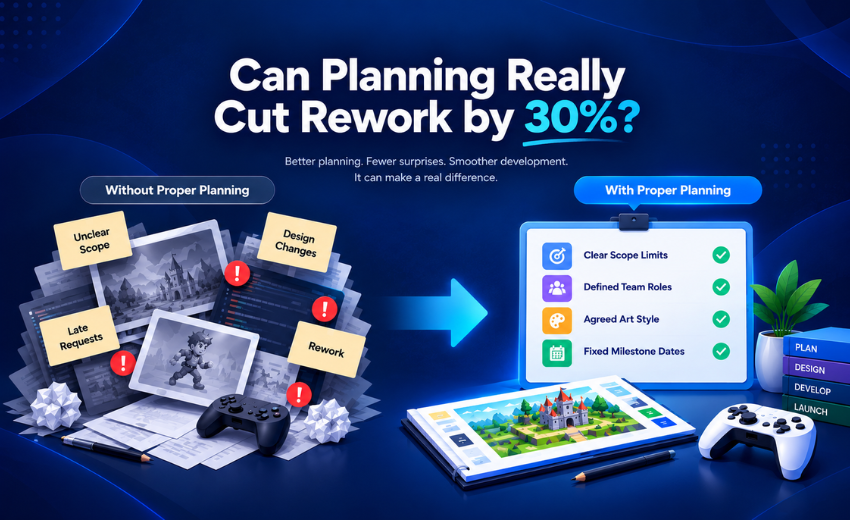
Studios often ask if planning can really trim rework by 30%. In Game Development in USA, early planning can reduce repeated work.
The 30% figure should not be treated as a fixed result for every project. The actual reduction depends on the team, project scope, planning quality, and how early problems are found.
What Better Planning Changes
Good planning gives every team member the same picture before work begins.
- Clear scope limits
- Defined team roles
- Agreed art style
- Fixed milestone dates
Shared direction means fewer arguments and fewer features being built twice.
Where Rework Usually Starts
Most redo work starts with unclear goals rather than weak programming skills.
- Unclear feature lists
- Late design changes
- Missing test plans
- Poor handoffs
Strong game development project management helps stop these small gaps from becoming costly delays.
How Early Decisions Save Development Time
Early choices about the engine, platform, and features affect how smoothly production moves.
- Pick the engine
- Confirm target platforms
- Lock core mechanics
- Prototype risky ideas
Teams choosing Unity Game Development early can reuse assets and avoid repeated rebuilding.
When Planning Prevents Expensive Changes
Changes made after alpha or launch can cost much more than early fixes.
- Review designs first
- Test prototypes regularly
- Track change requests
- Keep buffer time
Game development planning helps reduce game development cost without removing important features.
Can planning cut rework by 30%? It can in some projects, but the actual result depends on the team, scope, and planning quality.
What Should Be Planned Before Coding?
Before coding starts, a clear plan can save time and money. Strong Game Development in USA begins with preparation, not programming.
A solid game development strategy keeps the team focused, while a clear game design process helps prevent costly changes later.
Game Concept and Target Players
Know exactly what you are building and who will enjoy playing it.
- Core game idea
- Player age group
- Similar popular games
- Unique selling point
- Player pain points
Core Gameplay and Game Mechanics
Decide how the game feels and what players actually do during each session.
- Main gameplay loop
- Controls and movement
- Rewards and progression
- Difficulty levels
- Basic game rules
Platforms and Devices
Platform choice affects design, budget, and the audience you can reach.
- Mobile, PC, or console
- Screen sizes
- Input methods
- Online or offline
Art Style and Visual Direction
Visuals set the mood, so choose one consistent look before production begins.
- 2D or 3D
- Color palette
- Character design
- Sound and music
Technical Requirements
Choose tools and technology that fit the game's size and long-term goals.
- Game engine choice
- Programming language
- Server needs
- Game Development Cost estimate
Development Milestones
A game development roadmap breaks the project into small, trackable stages.
- Prototype first
- Alpha version
- Beta testing
- Launch and updates
Careful planning makes game development projects in the USA smoother, helping teams avoid delays, control spending, and launch games players enjoy.
How Does Pre-Production Save Money?
Planning before coding can decide whether a project stays on track or wastes money. Game development in the USA shows why early preparation matters.
Game pre-production covers ideas, tests, and budgets before full production begins, helping teams avoid expensive surprises later.
Turning an Idea Into a Clear Plan
A plan gives every team member the same goal from day one.
- Defined game concept
- Target player audience
- Core feature list
- Clear release timeline
Clear direction reduces repeated changes that can quietly eat into the project's budget.
Building a Game Prototype First
A small playable version shows what works before heavy spending begins.
- Test core gameplay
- Collect player feedback
- Drop weak ideas
- Save art costs
Early testing helps confirm whether the idea is fun before full production starts.
Finding Technical Risks Early
Game projects can face device and technology limits that may appear late without early testing.
- Game engine limits
- Device compatibility
- Performance issues
- Server load needs
Finding these issues early helps prevent costly rebuilds and missed release dates.
Setting a Realistic Development Budget
Accurate numbers help owners understand game development costs before signing a contract.
- Art and design
- Programming team hours
- Testing and launch
- Backup funds
A realistic game development budget keeps spending clear and gives investors better confidence.
Strong pre-production makes game development in the USA more controlled, faster, and less stressful for studios, publishers, and first-time founders.
How Should Game Teams Work Together?
Game development projects in the USA work best when designers, programmers, artists, and testers share one goal from day one.
A strong team keeps roles clear, communicates often, and fixes small problems before they become costly delays.
Keep Roles Clear From the Start
Each person should know what they own and when their work is needed.
- Assign clear responsibilities
- Set task owners
- Define approval steps
- Share project priorities
Clear ownership reduces confusion and helps work move between teams without unnecessary delays.
Keep Communication Regular
Teams need simple ways to share progress, questions, and changes.
- Hold short team meetings
- Share progress updates
- Track important decisions
- Keep files organized
Regular communication helps everyone work from the same information.
Review Progress Before Problems Grow
Frequent reviews make it easier to catch issues while changes are still manageable.
- Review builds regularly
- Check milestones
- Discuss blockers
- Confirm upcoming tasks
Early reviews help teams adjust before a small problem affects the wider project.
Set the Budget Around the Scope
Game development outsourcing can lower costs when the project scope is clear.
- Estimate team costs
- Add testing time
- Include marketing spend
- Keep emergency reserve funds
A dedicated game developer can also help keep the budget and schedule on track.
Game development in the USA succeeds when a dedicated game development team plans carefully, communicates clearly, tests often, and listens to players.
How Can Art Planning Reduce Rework?
Game development projects in the USA move quickly, and one art change late in production can create weeks of extra work.
A clear art plan helps teams agree early, avoid repeated fixes, and finish every build with less stress.
Creating the Art Style Before Production
Fix the visual direction first, so every artist works toward the same vision.
- Build mood boards
- Set color palettes
- Define line quality
- Approve sample assets
Planning Characters and Environments
List characters and locations early to avoid unexpected requests during production.
- Sketch character turnarounds
- Map environment themes
- Estimate asset counts
- Note special animations
Reusing Game Assets Properly
Smart asset reuse saves time when pieces are modular and easy to adjust.
- Create modular props
- Share texture libraries
- Use reusable rigs
- Name files clearly
Keeping Art Consistent Across Levels
Players notice mismatched visuals quickly, so every level should follow the same style.
- Follow a style guide
- Review levels together
- Match lighting rules
- Track version changes
Preparing Assets for the Game Engine
Ready-to-use files help programmers move faster and reduce repeated handoffs.
- Check file formats
- Optimize texture sizes
- Test imports early
- Limit polygon counts
Teams using game art outsourcing or a Game artwork company should share this plan before 2D game art and 3D game art production begins.
Strong art planning keeps game development projects in the USA on schedule, protects budgets, and gives players polished games.
How Does QA Prevent Late Changes?
Game development projects in the USA move fast, and a late change can delay launch, increase costs, and frustrate the whole team.
Quality assurance catches problems while they are still small, helping studios avoid rushed fixes and keep the release plan steady.
Testing During Development
Testers can work alongside developers, checking features as soon as they are added.
- Daily build checks
- Quick feedback loops
- Clear bug reports
- Shared test plans
Regular game testing keeps small mistakes from becoming costly problems later.
Finding Gameplay Problems Early
Playtesting shows whether controls, levels, and difficulty feel fair to real players.
- Confusing controls
- Unfair difficulty
- Broken level flow
- Unclear objectives
Fixing design issues early avoids rebuilding finished levels close to deadlines.
Checking Performance on Target Devices
Games need to run smoothly on the phones, consoles, and PCs players use.
- Frame rate checks
- Memory usage limits
- Battery drain tests
- Screen size support
Testing on real hardware can reveal slowdowns that emulators and office computers miss.
Fixing Bugs Before Final Testing
Clearing bugs early leaves the final testing round for important last-minute checks.
- Rank by severity
- Retest every fix
- Track repeat issues
- Lock features early
Steady game bug fixing keeps the final build stable and ready for release.
Strong game QA testing helps US game development teams ship stable games on time without costly last-minute changes.
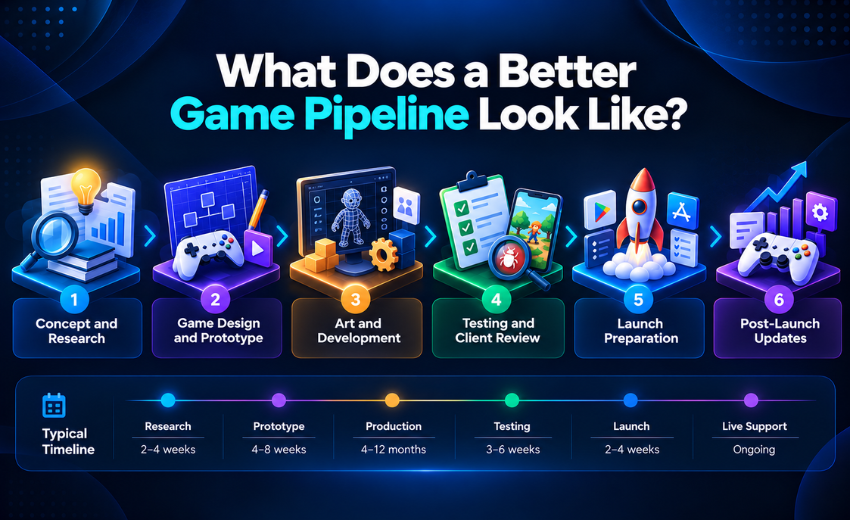
What Does a Better Game Pipeline Look Like?
Many studios lose time and money because their game development workflow is unclear. A shared plan helps fix this early.
A clear game development pipeline follows a simple order, so every team knows what to build and when.
Concept and Research
Every project begins by studying players, competitors, and the idea itself.
- Define target audience
- Study competitor games
- Validate the core idea
Game Design and Prototype
Next, the team turns the idea into rules and a playable test.
- Write a clear design document
- Build a rough prototype
- Test the core gameplay loop
Art and Development
Artists and programmers then build the game in small, steady, trackable pieces.
- Set weekly milestones
- Use version control
Testing and Client Review
Bugs and balance issues are found here before players ever see them.
- Run device testing
- Share builds with clients
- Fix critical bugs first
Launch Preparation
Store pages, trailers, and technical checks need attention before release day.
- Prepare store listings
- Plan marketing assets
Post-Launch Updates
Launch is only the start. Players expect fixes, new content, and ongoing support.
- Patch bugs quickly
- Track real player feedback
Timelines vary by project size, but these ranges are common in a game production pipeline.
| Stage | Typical Duration | Lead Role |
| Research | 2–4 weeks | Producer |
| Prototype | 4–8 weeks | Game designer |
| Production | 4–12 months | Art and tech leads |
| Testing | 3–6 weeks | QA lead |
| Launch | 2–4 weeks | Marketing manager |
| Live support | Ongoing | Community manager |
A clear game development lifecycle helps control the budget, while skilled game development services help teams follow it from start to finish.
Where Does Gamecrio Fit In?
Gamecrio helps studios, startups, and brands turn game ideas into finished products that run smoothly and keep players coming back.
Many teams searching for Game Development in USA want one partner who can support planning, design, coding, art, and testing together.
What Gamecrio Offers
Gamecrio is a game development company USA teams can contact for steady, step-by-step project support.
Here is what you get when working with the team:
- Clear planning before work begins
- Honest timelines and regular updates
- Flexible game development services for different budgets
- Support from the first sketch to live launch
From Game Concept to Production
Every project begins with an idea, and the team shapes it into a clear production plan.
- Idea review and market research
- Game design document and feature list
- Prototype to test the core loop
- Production plan with clear milestones
This keeps the whole team aligned before the main building work begins.
2D and 3D Game Art Support
Strong visuals help players connect with a game, so art receives the same planning and care.
- Characters, props, and environments
- UI screens, icons, and menus
- Concept art and style guides
- Sprites and 3D models ready for the engine
Each asset follows the game style and is prepared for the required devices.
Unity Game Development
Unity is widely used for mobile, PC, and console games.
- Mobile games for Android and iOS
- Cross-platform builds from one codebase
- Casino Slot Game Development with reel logic and bonus rounds
- Clean code that is easy to update
The result is a stable build that can be expanded as the project grows.
Gameplay, Animation and VFX
Smooth controls and lively effects help make a game more enjoyable to play.
- Gameplay mechanics and level logic
- Character and object animation
- Particle effects, lighting, and transitions
- Sound-ready hooks for music and effects
Together, these details give players a smoother and more engaging experience.
QA and Technical Support
Testing catches bugs and technical problems early, helping players get a cleaner launch.
- Functional and performance testing
- Device and screen compatibility checks
- Bug reports with clear steps
- Post-launch fixes and updates
Support can continue after release, helping the game stay stable as players use it.
Game development outsourcing with Gamecrio means one team can support every stage of your project.
For Game Development in USA, Gamecrio offers clear communication, skilled people, and steady support from the first idea to launch.
Conclusion
Good planning helps teams avoid unnecessary changes, control costs, and keep development moving smoothly from concept through launch.
Game Development in USA works better when designers, artists, developers, and testers stay connected throughout production.
- Less unnecessary rework
- Better budget control
- Smoother team communication
- Fewer late-stage problems
- More confidence before launch
A well-planned pipeline gives the team a clearer path from the first idea to a finished game.
Ready to Move Your Game Project Forward?
Turn your game concept into a clear, well-planned production roadmap with the right technical and creative support.
- Game planning and prototyping
- 2D and 3D game art
- Unity game development
- Gameplay, animation, and VFX
- QA and technical support
Discuss your project with Gamecrio Studios and explore the right development approach for your goals.
Game Development Planning FAQs
1. Why is planning important in game development?
Planning defines features, budgets, timelines, and risks before production begins, reducing confusion and rework.
2. How much does game development planning cost?
Planning costs depend on project scope, platforms, features, art requirements, and overall development complexity.
3. How long does game planning take before development?
Planning time depends on game size, complexity, technical requirements, and the amount of prototyping needed.
4. Can game planning reduce development time and rework?
Yes, early planning identifies unclear requirements, technical risks, and design problems before production begins.
5. Should I hire a game development company for planning?
A game development company can manage planning, prototyping, art, development, testing, and production support.